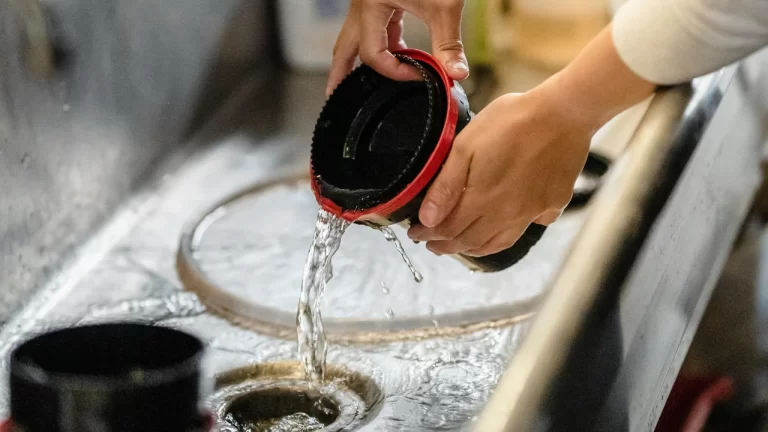
Imagine finishing up a delicious family dinner, only to be met with a stubborn, foul odour wafting from your kitchen sink that just won’t go away. You’ve scrubbed the basin and emptied the trash, but the scent persists because food scraps are trapped and rotting inside your garbage disposal unit.
A garburator, or garbage waste disposal, as many call it, is an essential tool for the modern Canadian kitchen, designed to grind down organic waste and keep your home sanitary. However, these hardworking appliances are often misunderstood, leading to frequent jams, clogs, and mechanical failures that require a professional plumber to fix.
In this blog, we will tackle important topics related to garburator and everything you need to know about food waste disposer, from daily operation and deep-cleaning techniques using baking soda to troubleshooting a common jam and understanding the environmental benefits of reducing the waste sent to a landfill.
Contact us today through our form or call +1 (416) 252-5557 for expert plumbing, drain, and related services in Toronto, Etobicoke, Mississauga, and across the GTA.
Understanding Your Garburator: How It Works
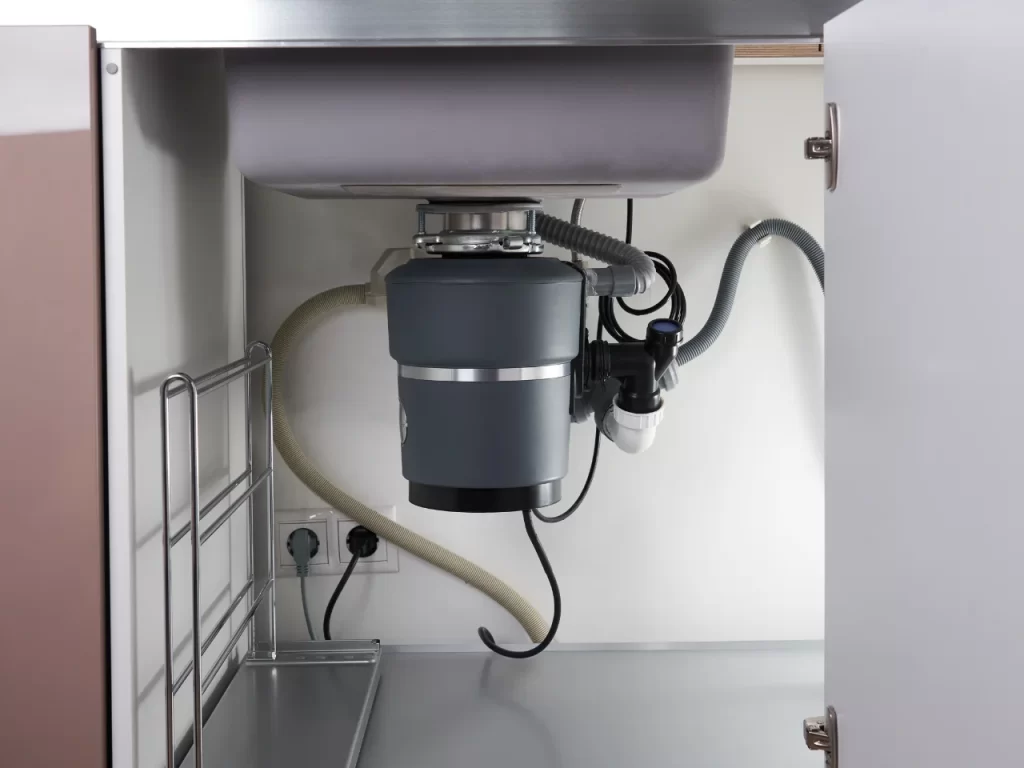
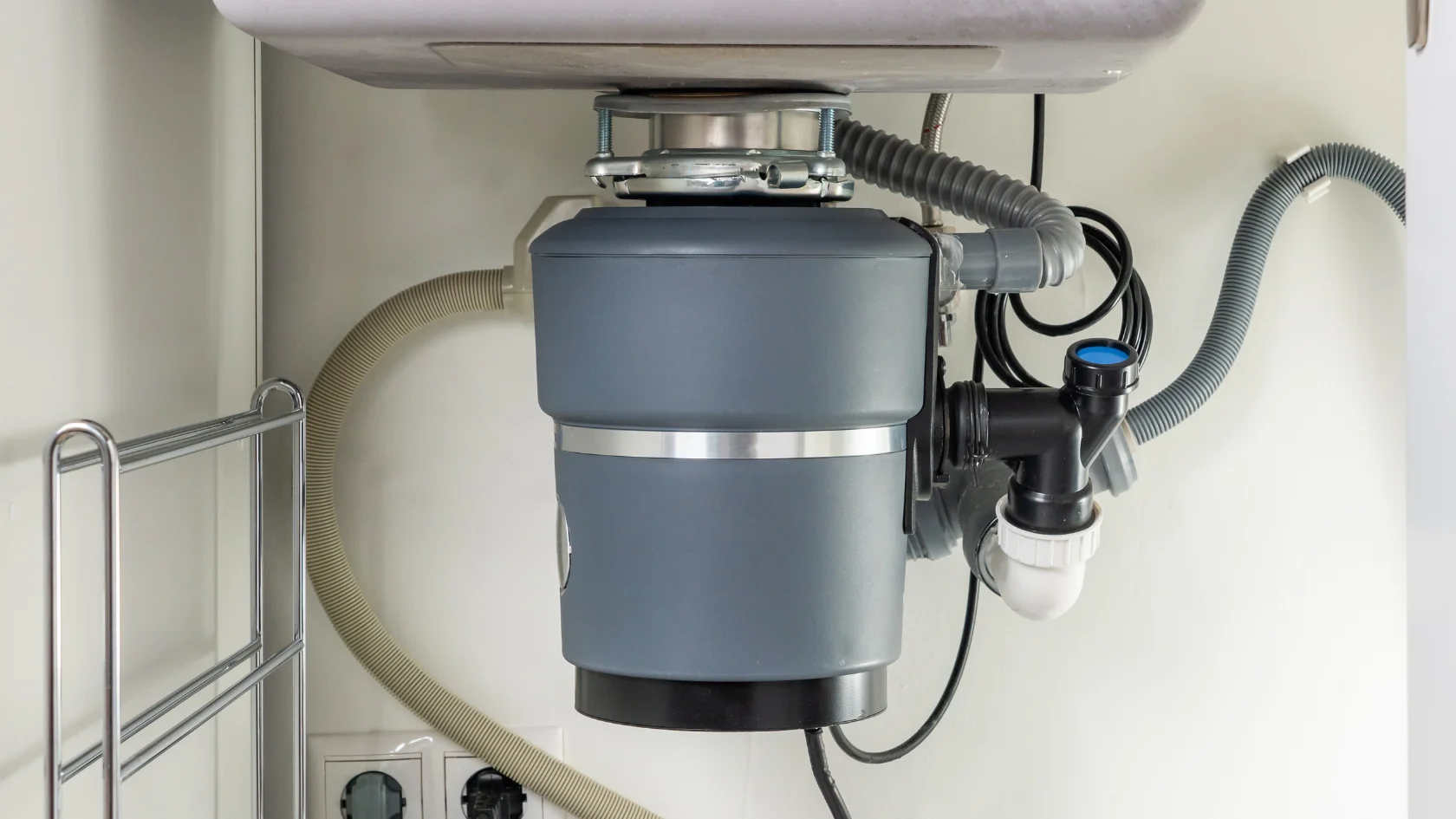
Understanding what’s going on under your sink is helpful before you can properly clean and maintain a garburator. Waste disposers don’t really have sharp, rotating lawnmower blades, despite what the general public believes. Rather, they employ a m
otor-driven system in which food waste is forced against a stationary grind ring by a revolving plate using centrifugal force.
The induction motors power this process, turning the food into a fine slurry or particle size that can safely travel through your drain pipe and into the municipal wastewater treatment plants. Whether you have a continuous feed model that runs with a simple switch or a batch feed unit that requires a stopper to activate, the goal is the same, which is to dispose of food waste efficiently without harming your plumbing.
Common Types of Waste Disposers or Garburators
- Continuous Feed Disposer: The most common variety, which stays on as long as the air switch or wall toggle is flipped.
- Batch Feed: These units only operate when the evolution cover control is in place, making them a bit safer for households with curious children.
- High-Torque Models: Premium units like the InSinkErator Evolution series or Moen high-hp models offer better sound reduction and can handle tougher food particles.
How to Clean a Garburator to Prevent Unpleasant Odours
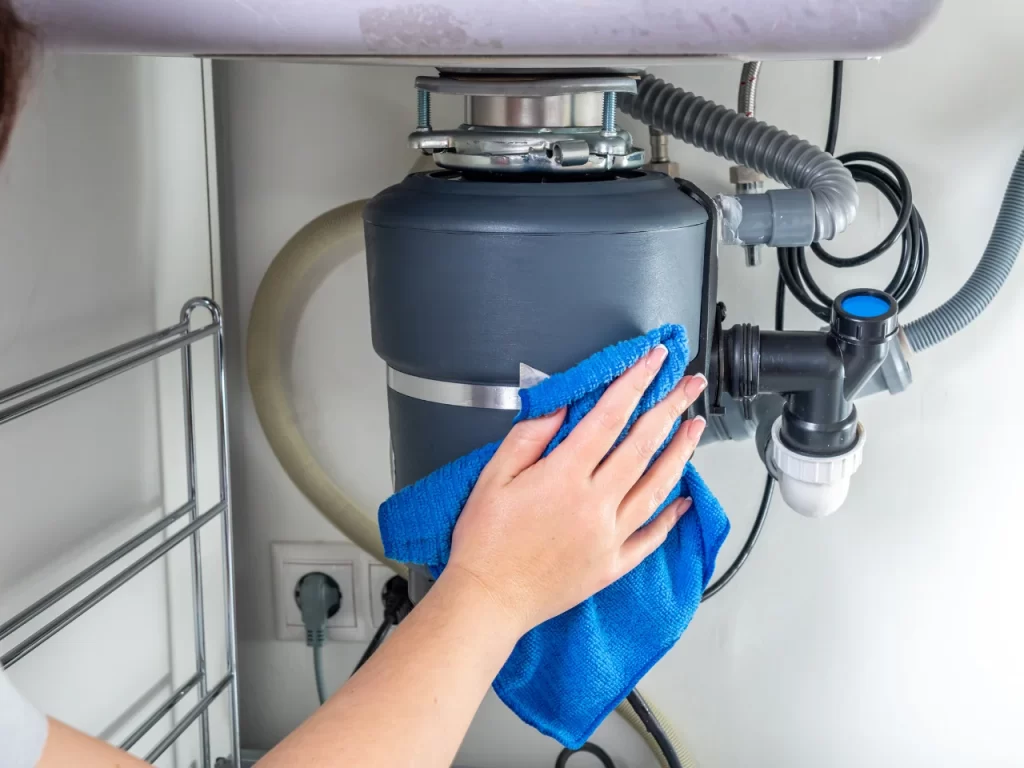
If you notice an odour coming from your kitchen sink, it’s usually because organic matter has slimed the sink baffle (the rubber gasket at the top) or is stuck to the internal grind chamber. Learning how to clean a garburator properly will extend the life of the appliance and keep your kitchen smelling fresh.
The Power of Baking Soda and Vinegar
One of the most effective ways to neutralize unpleasant odours is through a natural chemical reaction. First, fill the disposer with half a cup of baking soda. Add a cup of white vinegar after this. The fizzing movement aids in clearing the stainless steel components of tough dirt. After 10 minutes, rinse the device with hot water while the motor is operating.
Scrubbing the Sink Baffle
The removable rubber baffle is often the hidden culprit of a smelly sink. Food splashes up and sticks to the underside of this accessory, where it rots out of sight. Put on some gloves, remove the baffle, and scrub both sides with a brush and soapy water. If yours isn’t removable, use an old toothbrush to scrub the folds of the rubber.
Using Ice and Citrus
To keep the internal parts moving smoothly, drop a handful of ice cubes into the garbage disposer. As the unit begins to grind the ice, the hard edges act as a natural abrasive to scour the blade-like impellers. For a fresh scent, toss in a few small citrus peels. The natural oils in the peels act as a built-in cleaner and deodorizer.
What Should and Shouldn’t Go Down Your Garbage Disposal
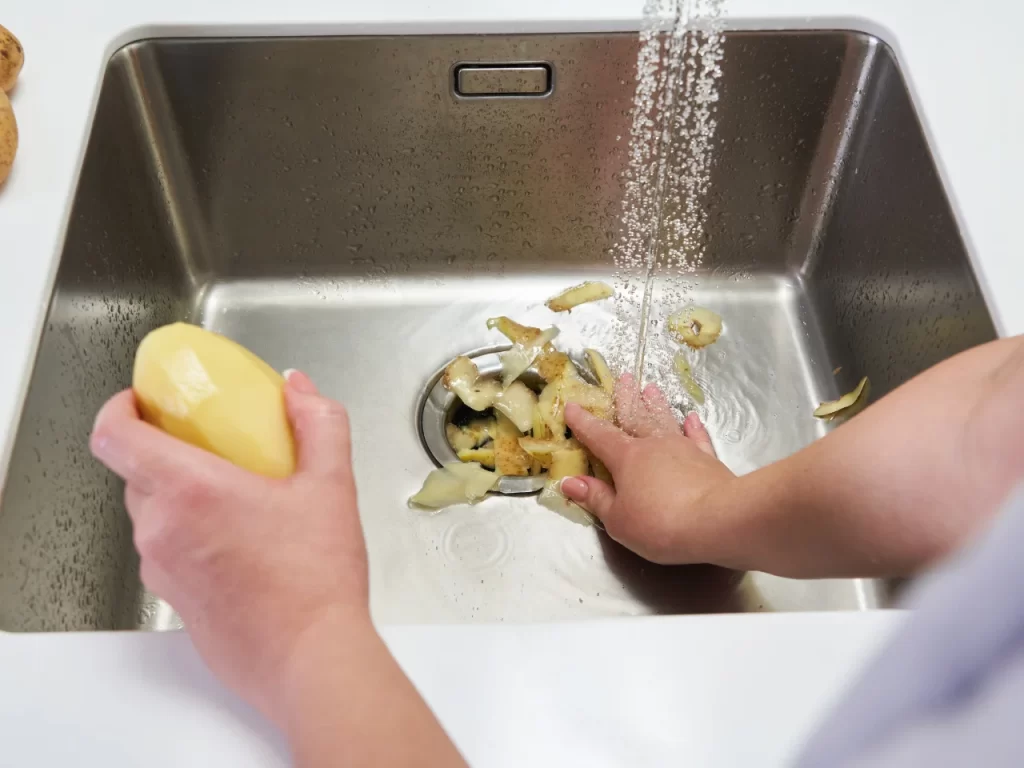
You need to be careful what you feed your waste disposal equipment to prevent an unpleasant clog or a damaged pipe. There are limits to even the most potent 1-hp advanced series units. Treating the sink like a second bin may be tempting, but some things will require a service visit.
Safe Items for Your Garburator
Most soft food scraps and vegetable ends are perfectly fine. Small fruit pits or rinds, when cut into small pieces, can also be processed. It is also safe to process leftover compostable items that are non-fibrous.
Items That Cause a Jam or Clog
You should strictly avoid putting fibrous vegetables like celery, corn husks, and onion skins down the drain, as they can wrap around the rotating parts. FOGs (fats, oils, and grease) are also a major issue because they solidify in the drain and create massive blockages. Starchy foods such as pasta, rice, and potato peels should be avoided as they expand in water and turn into a thick paste. Finally, never put coffee grounds down the disposer; they pack together like wet sand and settle in the trap.
Contact us today through our form or call +1 (416) 252-5557 for expert plumbing, drain, and related services in Toronto, Etobicoke, Mississauga, and across the GTA.
Troubleshooting a Jammed Garburator
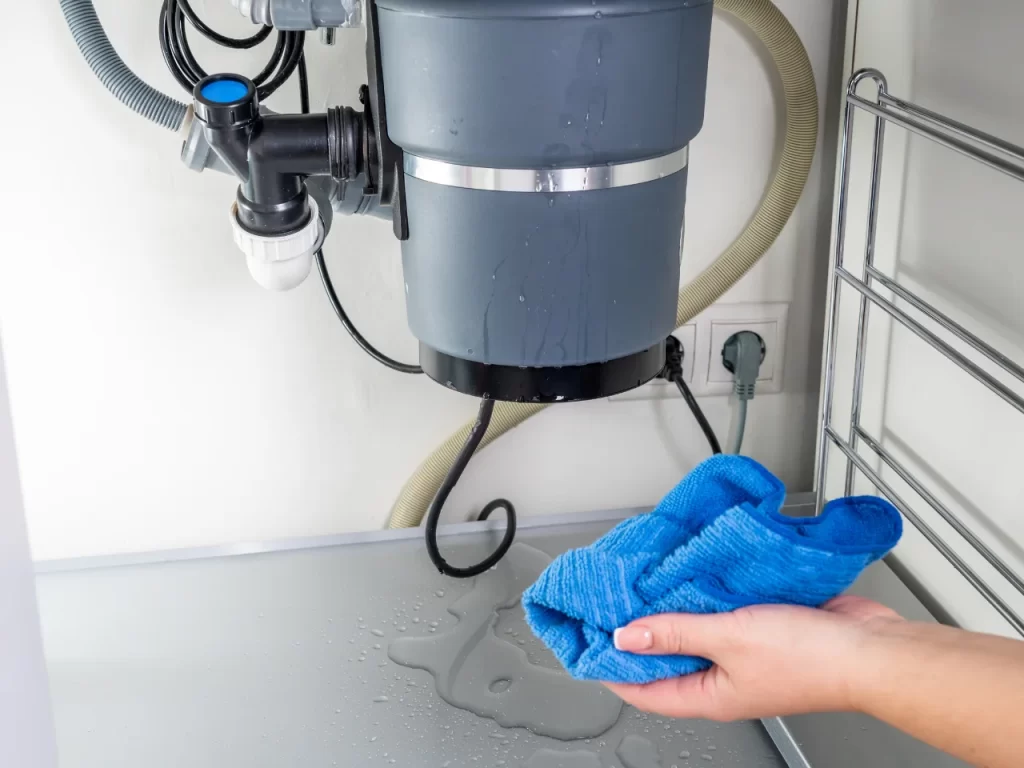
Your disposer is probably stuck if all you hear when you flick the switch is a quiet or low hum. This typically occurs when a hard object gets trapped between the revolving plate and the grind ring, and one of these samples is like a fruit pit or a stray piece of silverware.
- Safety First: Always ensure the power is off. If your unit has a cord, unplug it. If it is hardwired, turn off the breaker.
- Use the Wrench: Most units, especially an InSinkErator Power or Badger 5, have a small hexagonal hole at the very bottom. To physically remove the impediment, insert the wrench—often referred to as a jam-buster accessory—and turn it back and forth.
- Press Reset: Once the jam is cleared, wait a minute for the motor to cool down, then press the small red reset button located on the bottom of the garbage disposer.
- Test: Plug the ez connect cord back in, run cold water, and activate the unit to ensure it spins freely.
The Environmental Impact: Landfill vs. Wastewater
Using a garburator is actually an environmentally friendly choice for many Toronto homeowners. Food waste breaks down anaerobically (without oxygen) in a landfill, producing methane, a strong greenhouse gas.
By using a food waste disposer, the organic matter is sent to wastewater treatment plants. Many modern facilities are made to further process this garbage, treat it to make fertilizer, or extract the methane to generate green energy. It’s an excellent method of managing waste and promoting a circular economy.
Upgrading Your Kitchen: Choosing the Right Model
If your old unit is leaking from the gasket or the motor has finally burned out, it might be time for an upgrade. Modern garbage disposers are far more advanced and sophisticated than the noisy, vibrating devices from the older types.
Key Features to Look For:
- Sound Reduction: Insulated shells are used in more expensive models, such as the InSinkErator Evolution series, to provide whisper-quiet grinding.
- Power Cord Options: Some units come as a garbage disposal with a power cord, while others are designed to be hardwired. The ez connect system makes DIY installation much simpler.
- Stainless Steel Internals: To prevent corrosion from acidic food waste, look for a stainless steel grind chamber.
- Magnetic Catch: A magnet around the sink flange can catch dropped spoons before they fall into the disposer and cause a jam.
At Absolute Draining & Plumbing, we often recommend the InSinkErator brand for its reliability and the wide range of advanced series options that fit perfectly under a standard Toronto kitchen sink.
Professional Garburator Installation and Repair
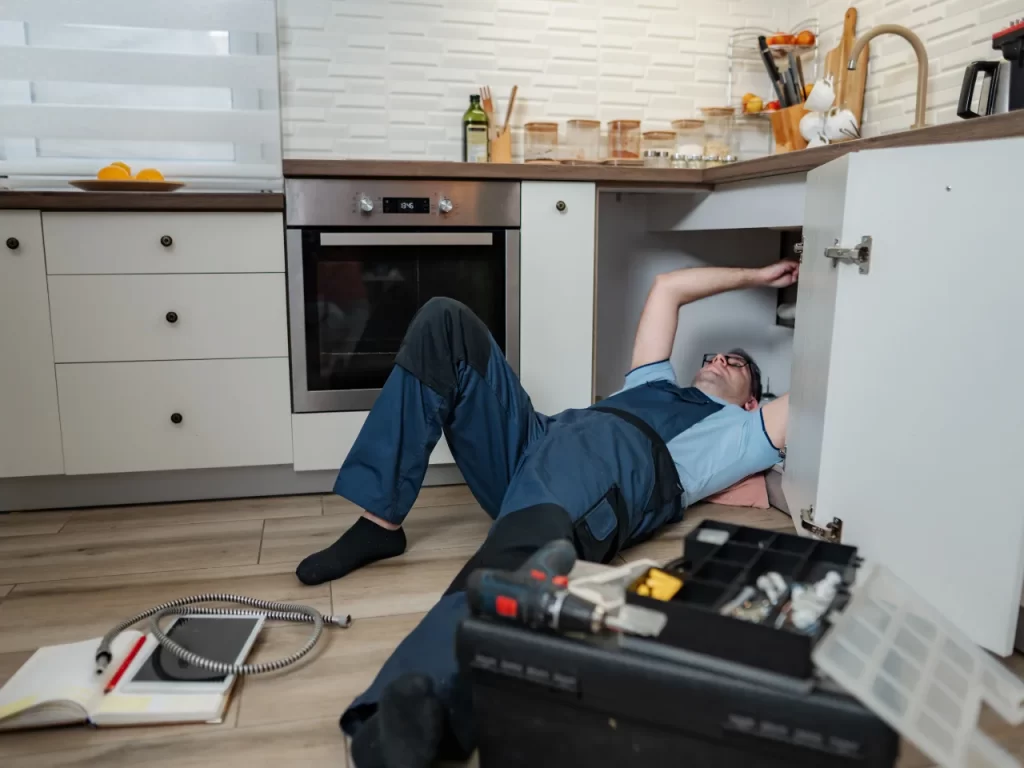
A garbage disposal requires both plumbing and electrical work, despite the fact that many homeowners try to install it themselves. Slow leaks caused by a small drain pipe misalignment might eventually corrode your cabinets. A leak-free experience also depends on making sure the gasket is watertight and the sink baffle is properly installed.
If you are dealing with a persistent clog deep in the drain, or if your unit is leaking from the bottom of the housing, it is time to call a plumber. We have over 20 years of experience serving the Greater Toronto Area, ensuring that your kitchen sink remains the functional heart of your home.
Why Toronto Residents Trust Absolute Draining & Plumbing
- 20+ Years of Experience: In the GTA, we have witnessed every kind of drain blockage and clog. So, rest assured, we can serve and help you with any type of plumbing issues you may have!
- Flat-Rate Pricing: No surprises on your bill; the price we quote is the price you pay.
- 24/7 Emergency Service: Because a backed-up sink or sewage garbage issue doesn’t wait for business hours.
- Expert Rebate Assistance: We help you navigate city programs for flood protection and water service.
Keep Your Kitchen Running Smoothly
Maintaining your garburator doesn’t have to be a chore. You can keep your garbage disposal unit operating at its best for ten or more years by only running a lot of cold water during and after use, avoiding fibrous scraps, and doing a deep clean with baking soda once a month.
Don’t let a jam, a lingering smell, or a leaky sink become a bigger issue if you’re sick of dealing with them. Whether you need a simple repair, a total upgrade to a high-rpm InSinkErator, or help with your broader plumbing system, our team is ready to help.
Is your kitchen sink draining slowly, or is your garbage disposal making a strange noise? Contact Absolute Draining & Plumbing today for a free estimate and let our Toronto experts get your plumbing back in top shape!
Contact us today through our form or call +1 (416) 252-5557 for expert plumbing, drain, and related services in Toronto, Etobicoke, Mississauga, and across the GTA.